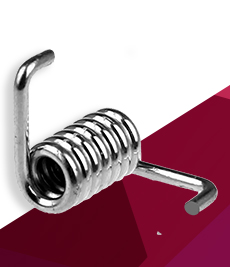
Compression Springs
Input results shown will be +/- 10% from middle value
Hint: The closer your min and max inputs are, the more accurate your results will be!
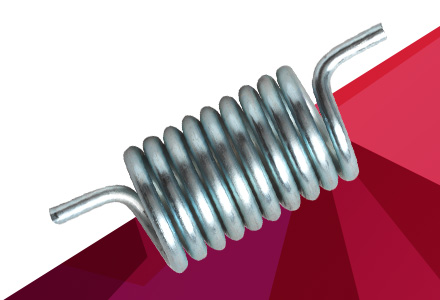
Extension Springs
Input results shown will be +/- 10% from middle value
Hint: The closer your min and max inputs are, the more accurate your results will be!
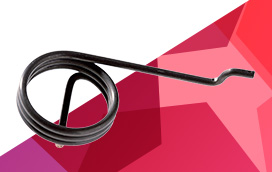
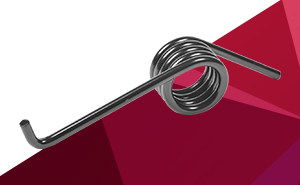
Torsion Springs
Input results shown will be +/- 10% from middle value
Hint: The closer your min and max inputs are, the more accurate your results will be!
How We Saved a Failing Prototype with One Set of Custom Torsion Springs

- Why did our "perfect" prototype fail on the finish line?
- Can 0.001” really change everything in a torsion spring?
- When is a stock spring just not enough for your design?
- What specific dimensions must you define for a successful custom torsion spring?
- How do you move from a "guess" to a professional blueprint?
- Where is the best place to order custom torsion springs for production?
- Engineering Your Success
Custom torsion springs are precision-engineered components designed to store and release rotational energy according to a project's exact mechanical requirements. By tailoring every dimension, from wire diameter to leg geometry, custom torsion springs ensure that a device performs reliably under specific torque and travel constraints that off-the-shelf parts simply cannot meet.
I remember sitting in the lab a few years ago with a group of junior engineers, staring at a high-end medical lid hinge that just wouldn’t stay open. On paper, everything was perfect; the CAD models were sleek, the tolerances on the plastic housing were tight, and the assembly looked flawless. We had originally sourced a "close enough" part from a big-box supplier to save time and shave a few dollars off the initial BOM, but in practice, the lid felt spongy and would occasionally slam shut without warning. It was a classic case of a "catalog part" meeting a "specialized problem," where the spring's generic force simply couldn't counteract the weight of our specific lid.
The problem wasn't our overall mechanical design; it was the assumption that a standard, mass-produced spring could handle a non-standard job. In precision torsion springs, "close enough" is usually a recipe for mechanical failure, safety hazards, or, at the very least, a poor user experience that makes a product feel "cheap." We quickly realized that to save the project and meet stringent safety standards, we didn't need a total redesign of the hinge; we needed a torsion spring manufacturer capable of hitting microscopic tolerances to provide the exact resistance and "dwell" the hinge required.
This is the most important lesson I share with students and new designers: the physics of torque is incredibly sensitive, far more than most people realize when looking at a simple coil of wire. During our troubleshooting phase, we decided to experiment with a wire diameter increase of just 0.001” (one-thousandth of an inch). To the naked eye, this change is practically invisible, thinner than a human hair, and to a beginner, it might seem like a negligible adjustment that wouldn't impact the final product.
However, in a professional torque spring calculation, the wire diameter is raised to the fourth power. The mathematical formula for spring rate (k) looks like this:
k = Ed^4 ÷ 64DN
Where d is the wire diameter. Because of that d^4 relationship, that tiny 0.001” jump significantly increased the spring rate and the total torque output. Suddenly, the lid stayed open exactly where it was supposed to, but we also had to account for the increased internal stress on the coils. This level of granularity is why a custom torsional spring design is often the only way to achieve the delicate balance between "strong enough to hold" and "flexible enough not to snap" under repeated use over the product's lifespan.


Stock springs are manufactured for "general use," which usually means they come with equal leg lengths (typical legs), no specialized bends, and no pitch between the coils. While these are great for hardware store repairs or simple DIY projects, real-world engineering projects are rarely "general." Often, a device requires a spring to perform two jobs at once or fit into a space that wasn't originally designed for a bulky coil. If your assembly has a specific pin it must loop around or a narrow channel it must sit in, a stock spring will likely bind or slip.
In our specific hinge case, we needed custom spring leg bends, specifically a 90-degree offset, to hook securely into a recessed plastic housing that a straight leg couldn't reach. We also required a specific pitch (the distance between coils) to prevent friction and "coil bind," which happens when coils rub against each other and cause a jerky motion. This effectively allowed the spring to act slightly like a compression spring while it rotated. Whether you need double torsion springs for balanced loading or a torsion spring with custom legs to navigate a tight spatial envelope, customization allows the spring to fit your device, rather than forcing you to compromise your design to fit a stock part.
When you move away from off-the-shelf parts, the sheer number of variables can feel overwhelming. However, my advice is to focus on the "Big Four" dimensions. These are the physical constraints that will dictate whether your spring fits your assembly and provides the torque you need.
To get an accurate custom torsional spring design, you must consider the following:
-
Wire Diameter: As we discussed, this is the most sensitive variable. It is the primary driver of your spring's strength.
-
Inner and Outer Diameter: You must know if your spring will be sliding over a shaft (mandrel) or fitting inside a hole. Remember that as a torsion spring is deflected (wound up), the coil diameter actually decreases. If your inner diameter is too tight, the spring will bind on the shaft and fail.
-
Leg Lengths and Bends: This is where the "custom" in custom torsion springs really shines. You need to measure the distance from the center of the spring body to the point where the force is applied. If you need a torsion spring with custom legs, you’ll also need to define the angle and radius of any specialized bends required to hook into your device.
-
Total Coils: This determines your "Active Coils," which directly affects the spring rate. More coils generally mean a softer spring with more travel, while fewer coils result in a stiffer, high-torque part.


By defining these precisely in a tool like the Spring Creator, you ensure that your precision torsion springs arrive ready to perform without any "field adjustments" or unexpected mechanical interference.
In the early days, engineers had to spend hours with slide rules or complex, error-prone spreadsheets, but today, you don't need to be a math wizard to get a custom torsion spring quote online. We used the Spring Creator at Acxess Spring to bridge the gap between our theoretical ideas and a physical, high-performance part. This tool takes the mystery out of the physics, allowing you to iterate your design in seconds rather than waiting weeks for a physical sample that might not work.
By inputting our requirements into the Spring Creator, we were able to transform our "napkin sketches" into professional data. The tool allowed us to:
Visualize the torsion springs in a live 3D CAD that we could rotate and inspect before ordering.
-
Check the maximum safe travel to ensure the wire wouldn't take a permanent "set" (deform) under the load of the lid being opened too far.
If you are wondering how to design custom torsion springs that actually work on the first try, this tool is your best friend. It turns a "researcher" into a lead engineer by providing the hard data and professional blueprints needed to back up every design choice you make to your stakeholders.
Once we validated our design with a few prototypes, the question shifted from "will it work?" to "where can we get these at scale?" Choosing where to order custom torsion springs is a critical pivot point for any project; you need a partner that understands the jump from a 25-piece prototype run to a 10,000-piece production order. Many shops are good at one but not the other, but for a project to succeed commercially, you need consistency in quality across every single unit delivered.
Whether you are a student needing a handful of parts for a senior design project or a procurement manager looking for torsion spring wholesale pricing for a global product launch, choosing a dedicated torsion spring manufacturer like Acxess Spring is vital. They provide the flexibility to order exactly what you need without the rigid constraints of a catalog. You can request an instant quote for different quantities, allowing you to see exactly how the unit price drops as your production volume increases. This transparency helps you keep your project both high-quality and over-budget-proof as you move from the lab to the market.
Saving a failing prototype usually doesn't require a total overhaul or a massive budget; it just requires the right components. By focusing on the minute details of your spring design, you ensure longevity, safety, and functionality for your product.
Here are the essential lessons learned from our journey from a failing hinge to a successful product launch:
-
Precision is Paramount: A change as small as 0.001” in wire diameter fundamentally alters torque and stress levels due to the d^4 relationship in the rate formula.
-
Function Over Form: Custom legs and bends are not just "extras"; they are often the only way to fit a spring into complex, tight, or non-standard housings without mechanical interference.
-
Validate Your Math: Always use a tool like the Spring Creator to verify "rate per degree" and "maximum safe travel" before you commit to a manufacturing run to avoid wasting time on broken prototypes.
-
Plan for Scale: Designing custom parts early makes it easier to transition to torsion spring wholesale ordering when you move from the lab to mass production, significantly lowering your per-unit cost.
-
Don't Guess, Ask: You don't have to do it alone. If you're stuck on a calculation or a material choice, contact our experts for a technical review to ensure your design is optimized for both performance and manufacturability.
Ready to fix your prototype? Design your custom spring now using our Spring Creator and get an instant blueprint and quote!
Invest in precision and quality
Spring Creator 5.0 offers you the possibility to design springs that perfectly fit your needs. Our platform not only allows you to design various types of springs but also provides advanced tools like the Online Spring Force Tester to simulate and evaluate spring performance. Visualize your design in 3D, download detailed blueprints, and get instant quotes. Try it for free and discover why we are the preferred choice of engineers and makers!
Created by Alfonso Jaramillo Jr
President Acxess Spring
Over 40 Years of Experience in Spring Engineering and Manufacturing