Springs for Horse Trailer Ramps
Definition:
Torsional springs also known as torsion or rotational springs used to exert a radial/rotational force in horse trailer ramps.
1) Weights and Measures
The first step is to weigh and measure such ramp. The correct way to weigh this ramp is to do so while it is uninstalled so you get the dead weight of the ramp in pounds. Next, you must measure the length of the ramp in feet. These two values must be multiplied together and then multiplied by two to get the total inch-pounds of torque being applied on the spring for your horse trailer ramp.
2) Deflection
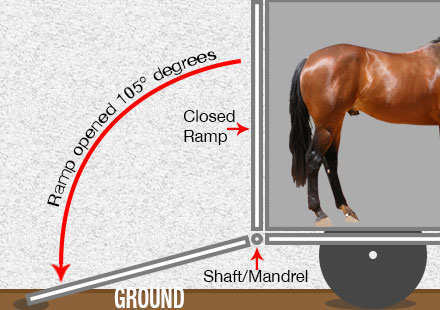
The deflection of a trailer ramp spring is measured in degrees because rotational springs work in a radial manner. This means that you must measure the amount of degrees your spring will have to travel from when the horse trailer ramp is closed to when it is open and touching the floor.
3) Spring Rate
Once you have both of these values you may go ahead and calculate the amount of torsion spring rate per degree your horse trailer ramp springs will need in order to accomplish your required torque and deflection. the way to makes this calculation is to divide to the torque (value calculated in step #1) by the degrees of deflection you measured in step #2.the result of this calculation will the required horse trailer ramp spring rate.
Because these torsion springs will most likely need to be heavy duty, you might need more than one in order to be able to accomplish the required torque and deflection. This means that the torsional springs will be working together (also known as working in parallel) thus dividing the total spring rate by the amount of springs being used. this allows for the springs to have a lighter spring rate per degree to avoid the spring being over stressed at the time of deflection. It is recommendable to use two or more torsion springs instead of using a double torsion spring because the labor and manufacturing os single torsion springs is far more economical.
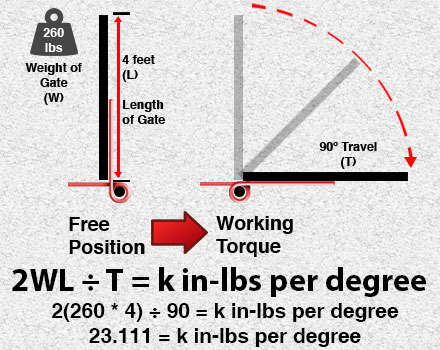
Horse trailer ramps are heavy but you may use a torsion spring to work as a lift-assist. The torsion spring’s stored energy at the time of deflection (when the ramp is pulled out) will want to spring back and return the spring’s legs to its original position so this energy is what will make it easier for you to lift that gate. Below is the calculation process you must undergo when looking to buy springs for a horse trailer ramp.