





search
Loading...
Compression Springs Compression Springs

Enter your Outside Diameter and Free Length
Hint: For larger search results, enter a bigger range of Min and Max Inputs

Outside Diameter
to
Inside Diameter
to
Free Length
to
Wire Diameter
to
Total Coils
to
Rate
to
Material Type
Max. Load
to
Max. Deflection
to
Solid Height
to
*Required Field
Extension Springs Extension Springs

Enter your Outside Diameter and Length Inside Hook
Hint: For larger search results, enter a bigger range of Min and Max Inputs

Outside Diameter
to
Length Inside Hook
to
Wire Diameter
to
Max. Load
to
Max. Deflection
to
Initial Tension
to
Rate
to
Material Type
*Required Field
Torsion Springs Torsion Springs

Enter your Outside Diameter and Total Coils
Hint: For larger search results, enter a bigger range of Min and Max Inputs

Outside Diameter
to
Inside Diameter
to
Total Coils
to
Free Position
to
Wire Diameter
to
Body Length
to
Max. Torque
to
Max. Deflection
to
Rate
to
Leg Length
to
Material Type
*Required Field
Conical Springs Conical Springs

Enter you Small Outside Diameter, Large Outside Diameter and Free Length
Hint: For larger search results, enter a bigger range of Min and Max Inputs

Small Outside Diameter
to
Large Outside Diameter
to
Free Length
to
Rate
to
Total Coils
to
Solid Height
to
Wire Diameter
to
Material Type
*Required Field

Identify an Extension Spring’s Direction of Wind

Determining the direction of wind for extension springs can be critical to the design and function of your application or project. In some cases, getting the wrong direction of wind will make your springs useless. Explained below is a common case where direction of wind is an essential factor. Also provided are instructions and diagrams explaining how to determine your extension spring’s wind direction.

When it comes to extension springs, the weakest point tends to be the hooks. Therefore, if the spring is extended past its elastic limit, the hooks can break. It is because of this that many people choose to use bolts instead of hooks. This is where the direction of wind comes into play. It is necessary to determine the wind direction in order for the bolt to properly twist into the spring’s inner diameter.

Most bolts are right handed and the direction in which the threads are wound must be the same as the direction in which the spring is wound. In this manner, right handed bolts go into right handed springs.
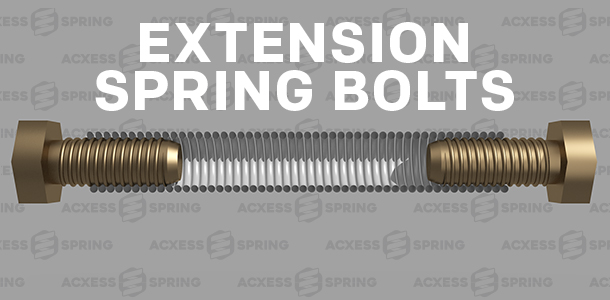
extension spring boltextension spring bolt

Determining the Direction of Wind

Use the front coil to determine the extension spring’s wind direction. First, position the front coil so that the tip of the wire is at 12 o’clock. Then, check the direction in which the wire begins to turn to form the first coil. If it goes clockwise, it’s a right hand spring, if it coils counter-clockwise, the spring is left handed.

 

In our previous posts, we talk about identifying the wind direction for both compression and torsion springs. For more design tips, visit our Tech Info page or follow us on Facebook for updates on new articles. If you need engineering help, feel free to contact our team.

Need additional help? Give us your device's requirements and we will put a spring on it!

extension spring direction of windextension spring direction of wind

Invest in precision and quality

Spring Creator 5.0 offers you the possibility to design springs that perfectly fit your needs. Our platform not only allows you to design various types of springs but also provides advanced tools like the Online Spring Force Tester to simulate and evaluate spring performance. Visualize your design in 3D, download detailed blueprints, and get instant quotes. Try it for free and discover why we are the preferred choice of engineers and makers!

Created by Alfonso Jaramillo Jr

President Acxess Spring

Over 40 Years of Experience in Spring Engineering and Manufacturing