search
Loading...
Compression Springs Compression Springs

Enter your Outside Diameter and Free Length
Hint: For larger search results, enter a bigger range of Min and Max Inputs

Outside Diameter
to
Inside Diameter
to
Free Length
to
Wire Diameter
to
Total Coils
to
Rate
to
Material Type
Max. Load
to
Max. Deflection
to
Solid Height
to
*Required Field
Extension Springs Extension Springs

Enter your Outside Diameter and Length Inside Hook
Hint: For larger search results, enter a bigger range of Min and Max Inputs

Outside Diameter
to
Length Inside Hook
to
Wire Diameter
to
Max. Load
to
Max. Deflection
to
Initial Tension
to
Rate
to
Material Type
*Required Field
Torsion Springs Torsion Springs

Enter your Outside Diameter and Total Coils
Hint: For larger search results, enter a bigger range of Min and Max Inputs

Outside Diameter
to
Inside Diameter
to
Total Coils
to
Free Position
to
Wire Diameter
to
Body Length
to
Max. Torque
to
Max. Deflection
to
Rate
to
Leg Length
to
Material Type
*Required Field
Conical Springs Conical Springs

Enter you Small Outside Diameter, Large Outside Diameter and Free Length
Hint: For larger search results, enter a bigger range of Min and Max Inputs

Small Outside Diameter
to
Large Outside Diameter
to
Free Length
to
Rate
to
Total Coils
to
Solid Height
to
Wire Diameter
to
Material Type
*Required Field

Recoil Spring Design

What is a recoil spring?

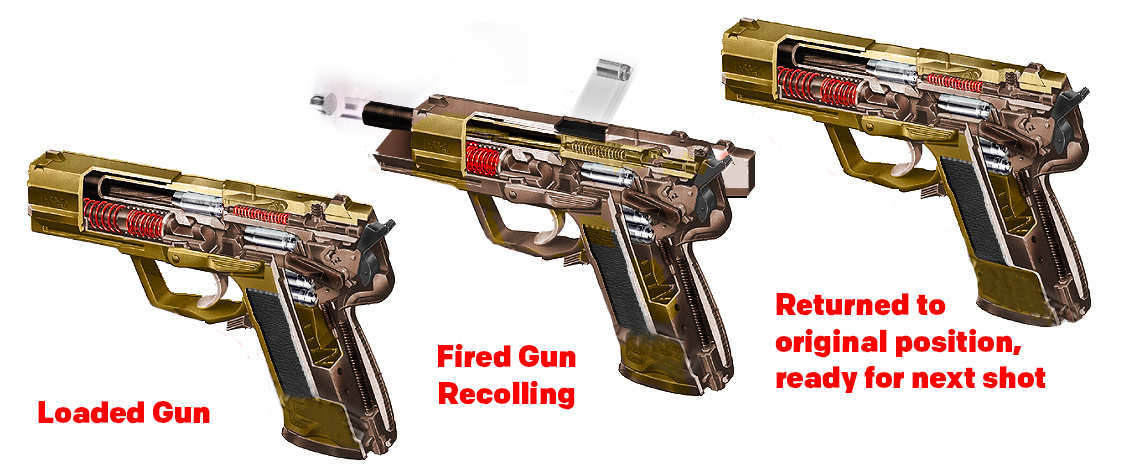
A recoil spring is a coiled spring in a firearm (pistol, rifle, or shotgun) that absorbs and cushions the firearm’s recoil (backward motion) when a shot is fired. In semi-automatic and automatic firearms, the spring is usually located behind the bolt or inside the slide. It compresses as the slide or bolt moves back, storing energy and preventing violent impacts. When the spring expands, it pushes the slide or bolt forward to chamber the next round. Without a well-matched recoil spring, the firearm would recoil more violently and could jam or wear out faster. A properly designed spring makes shooting more controllable and reliable.


How does a recoil spring work?

When you fire a bullet, expanding gas propels it forward and an equal impulse pushes the gun backward (Newton’s third law). The recoil spring sits in this path of motion. As the slide or bolt recoils, the spring compresses, slowing the moving parts and absorbing the energy. Then, as the spring decompresses, it drives the slide or bolt forward. This push-pull action ejects the spent case and chambers a fresh round, making semi-automatic fire possible. In effect, the spring is like a shock absorber: it cushions the slide/bolt impact and then returns the energy to complete the firing cycle.

This is captured by the impulse formula:

Discharge impulse = Recoiling impulse
or
Discharge mass × Discharge speed = Recoil mass × Recoil speed

In simple terms, the energy that propels the bullet forward also pushes the firearm backward. The recoil spring doesn’t change this law of motion, it can’t erase recoil, but it controls how that energy is managed. By absorbing part of the impulse and then releasing it in a controlled way, the recoil spring makes the shooting cycle smoother, reduces felt kick, and prevents the moving parts of the gun from slamming too harshly against the frame. This is why matching the spring to the firearm’s design and ammo load is so critical.


Function of Recoil Spring in a FirearmFunction of Recoil Spring in a Firearm

How does recoil spring rate affect shooting performance?

The stiffness (rate) of a recoil spring has a major impact on shooting. A heavier (higher-rate) spring resists compression, so the slide travels back more slowly and the muzzle tends to rise less. This can help you recover on target faster after each shot. However, an overly stiff spring can cause malfunctions. For example, a spring that’s too strong may not allow the slide to travel far enough to fully eject or load a round. It might prevent the slide from locking back long enough to chamber the next round, potentially causing a jam.

On the other hand, a lighter (weaker) spring compresses easily and lets the slide cycle faster. Lighter springs give a snappier shooting feel, but they also result in more felt recoil and muzzle flip. Since they absorb less energy, you feel a sharper kick, and these springs wear out faster under hot or +P loads. In practice, you want a balance: “not too heavy to impede smooth cycling, and not so light that it causes excessive recoil”.


When should I replace or upgrade my recoil spring?

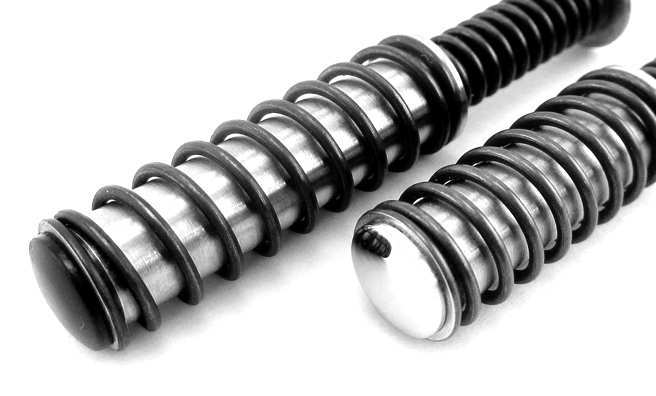
Recoil SpringsRecoil Springs

Springs wear out or may need changing if the gun is modified. Classic symptoms of a worn or incorrect recoil spring include strange ejection patterns or failures to cycle. For example, if your spent casings suddenly start landing far outside the normal 6–8 foot range, or if your pistol fails to chamber the next round, those are signs the spring might be too weak or worn. Likewise, adding a suppressor or shooting higher-pressure (+P) ammo generates more recoil energy and can overload a standard spring. In such cases, using a heavier spring can handle the extra force. A heavier recoil spring often solves the problem.

Many shooters replace pistol recoil springs on a schedule (e.g. every few thousand rounds) to prevent failures. If you start experiencing malfunctions, or you change your ammo/accessories, it’s wise to swap springs sooner. A qualified gunsmith can inspect your slide velocity and recommend the correct spring rate to restore reliable function.

How do I choose the right recoil spring for my firearm?

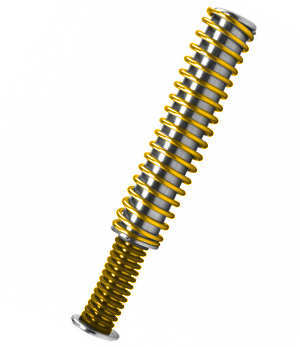
Recoil Spring Around Recoil RodRecoil Spring Around Recoil Rod

Choosing the proper recoil spring means matching spring rate and length to your gun’s design and ammo. Manufacturers typically provide a standard spring (for example, a factory Glock 19 might ship with a ~17-pound spring). You can start with that and adjust: if your gun recoils too harshly or doesn’t feed smoothly, try a heavier spring; if the slide doesn’t fully cycle, try a lighter one. The “best” spring depends on your goals: competition shooters often run lighter springs for fast shooting, while duty or suppressed guns typically use heavier springs for reliability.

Custom recoil springs let you precisely tune the rate and travel for your setup. To create one, measure your gun’s slide travel, installed spring length, and other dimensions. Then calculate the needed spring constant (often using a spring calculator). Acxess Spring can handle this process: we use our Spring Creator X to fine-tune spring designs, optimizing weight/rate, load, and cycle life. In other words, we adjust wire diameter, total coils, and material until the spring meets your exact specifications.

Whether you use a stock spring or design a custom one, make sure it’s made of high-quality spring steel (like chrome-silicon or music wire) and built to precise specs. A well-chosen recoil spring is like a precision gunsmithing tool: it can make your firearm function smoothly. If you need advice or an exact solution, our experts can recommend a spring from Acxess’s catalog or build a custom spring tailored to your needs.

How can I design or refine my recoil spring?

If you want to fine-tune a spring, good tools are essential. Acxess Spring’s online Spring Creator X lets you input dimensions (free length, wire diameter, total coil); it then calculates the spring’s performance. We can, for example, calculate the spring force at each compression point and ensure the spring has the right fatigue life under thousands of cycles.

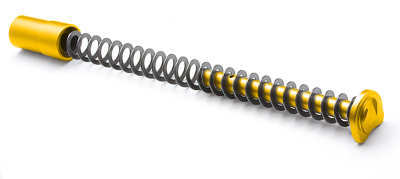
Recoil Spring Around Recoil RodRecoil Spring Around Recoil Rod

You can also use simple gunsmithing tools like a caliper and a spring tester. Measure the spring’s free length, outer diameter, and installed (compressed) length to verify any new spring will fit properly. If DIY calculations seem daunting, you can always consult a spring specialist. Our team can take your measurements and quickly design a spring (or suggest a catalog spring) that meets your performance requirements.

Let’s apply these ideas to a Glock 19, a popular compact 9mm pistol. The Glock 19 uses a captive recoil spring assembly, and its springs have an outer diameter of about 13 mm. Factory recoil springs for Glock 9mm pistols are typically in the 15–18 lb range, with around 17 lb being common. Because several Glock models share the same dimensions, you have many factory and aftermarket options. For instance, some shooters try a 15 lb spring for a slightly lighter recoil, while standard Glock springs are around 17 lb. If you install a compensator or suppressor, you’ll usually need a heavier spring to handle the extra back-pressure.

Why choose Acxess Spring for your recoil springs?

As a leading gun spring manufacturer, Acxess Spring produces precision springs for firearms (recoil springs, trigger springs, magazine springs, and more) all made in-house. We work with wire sizes from 0.006″ up to 0.080″, making us a one-stop shop for any gun-spring need. With our own tooling and Spring Creator X, we can optimize your design and give you instant quotes. This means we can fine-tune your recoil spring’s rate and fatigue life with minimal cost or delay.

Acxess Spring LogoAcxess Spring Logo

Our commitment is to quality, fast delivery, and customer satisfaction. By making springs and tooling under one roof, we keep lead times short and costs low. Every recoil spring we ship is inspected for consistency so you get the cycle life you need. If you have any questions, about spring weight, materials, or installation, our team is ready to help. We’ve partnered with firearm manufacturers and engineers for years, and we’ll lend that same expertise to your project.

Whether you need a standard pistol spring or a specialized rifle spring, custom-wound or off-the-shelf, Acxess Spring is here to assist. Feel free to contact our spring experts for any inquiry: from simple replacements to complex recoil spring design projects, we’ll work with you until you’re satisfied.

Shipping Restrictions

When it comes to recoil springs, it’s important to note that shipments are allowed only to U.S. addresses. Export of these components is strictly prohibited without a valid export license issued by the U.S. Department of State, Office of Defense Trade Controls, under the International Traffic in Arms Regulations (ITAR). This means we cannot ship recoil springs to foreign addresses, including APO/FPO addresses. Additionally, sales to individuals are not permitted—springs can only be provided to qualified manufacturers, engineers, and authorized entities. These restrictions ensure compliance with U.S. law and the safe, responsible distribution of firearm components.

Final Thoughts on Recoil Spring Design

Recoil springs may be a small part, but they have a massive impact on firearm performance and reliability. Choosing the right spring, maintaining it, and knowing when to upgrade ensures smoother operation, reduced wear, and better shooting control. Whether you’re an engineer, a manufacturer, or simply a firearm enthusiast, understanding recoil spring design helps you make smarter, more informed decisions. Here are five things to remember when designing your recoil spring:

  • Recoil springs absorb and return energy: They cushion the slide/bolt during recoil and push it forward to chamber the next round.

  • Spring weight matters: A spring that’s too light causes heavy muzzle flip, while one that’s too heavy can slow cycling or cause jams.

  • Signs of a bad spring: Short ejection distance or failures to cycle/feed are classic symptoms of a worn or incorrect recoil spring.

  • Use the right tools: Accurate measurements and design calculators (like Spring Creator X) help you pick or build a spring with the correct rate and durability.

  • Trust expert support: A custom spring or proper setup can make a big difference. Acxess Spring offers custom recoil springs and technical guidance to get you the ideal spring for your firearm.

Have questions or need a custom recoil spring? Contact our experts at Acxess Spring for personalized assistance and fast quotes.

Introducing Spring Creator X

The next evolution in spring design. Generate springs in real time, fine-tune critical dimensions, and explore a completely redesigned engineering experience.

Created by Alfonso Jaramillo Jr - President Acxess Spring

Over 40 Years of Experience in Spring Engineering and Manufacturing