





spring finder step 2

Step #2

Enter your Dimensions

Enter your Outer Diameter and Free Length
Hint: For larger search results, enter a bigger range of Min and Max Inputs

spring finder step 2

Step #2

Enter your Dimensions

Enter your Outer Diameter and Length Inside Hook
Hint: For larger search results, enter a bigger range of Min and Max Inputs

spring finder step 2

Step #2

Enter your Dimensions

Enter your Outer Diameter and Total Coils
Hint: For larger search results, enter a bigger range of Min and Max Inputs

spring finder step 2

Step #2

Enter your Dimensions

Enter you Small Outer Diameter, Large Outer Diameter and Free Length
Hint: For larger search results, enter a bigger range of Min and Max Inputs

Types Of Springs

Types of Springs Manufactured by Acxess Spring


Compression Springs

Most common wire spring with pitch in between its coils to store energy when a load or force is placed on it and release it once it is removed. Wire Sizes From 0.006 inches to 1.250 inches
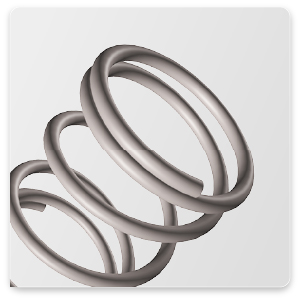
closed-and-square-end-compression-spring

Extension Springs

Wire spring with hooks on the ends that allow the spring to hold on to an object which will pull the spring's coils apart by adding force. Wire sizes from 0.006 inches to 1.000 inch
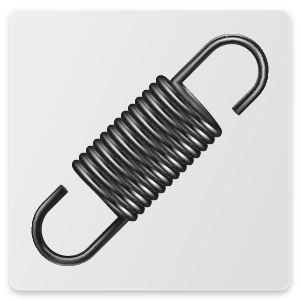
extension-spring

Torsion Springs

Wire springs with straight wires on the ends thus making legs which will allow a rotational force to be placed on them and produce torque. Wire sizes from 0.006 inches to 1.250 inch
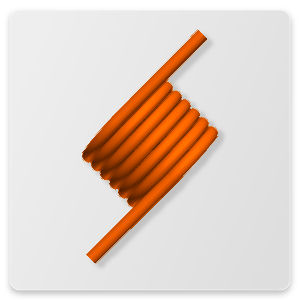
small-torsion-spring


Tapered Springs

Compression springs with variable outer diameters that give the springs' body a conical/tapered shape. Wire sizes from 0.006 inches to 1.000 inch
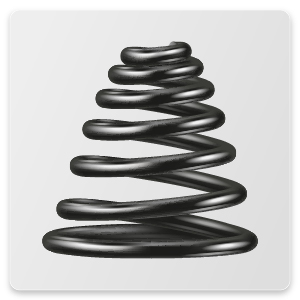
conical-spring

Garter Springs

Extension springs with connector ends that allow for one end to enter the other and form a garter belt. Also known as oil seals. Wire sizes from 0.006 inches to 0.100 inch
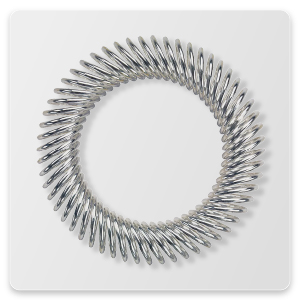
garter-spring

Double Torsion Springs

Two torsional springs in one, united by a bridge. They are used to simulate two torsion springs working together to produce more torque and less stress than what a single spring would produce. Wire sizes from 0.006 inches to 0.100 inch
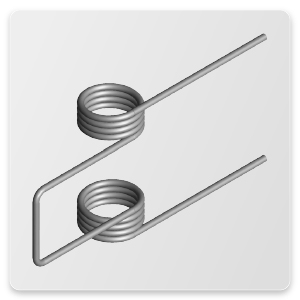
double-torsion-spring-2


Micro Springs

Very small springs often used in medical applications or simply applications that are small in size. Wire sizes from 0.006 inches to 0.020 inch
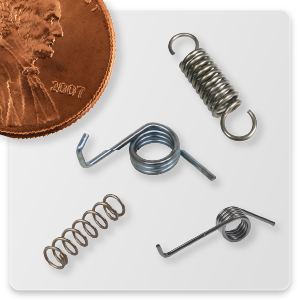
micro-spring

Wire Forms

Custom shaped wire to meet a specific device's requirements to function accordingly. Wire sizes from 0.006 inches to 0.100 inch
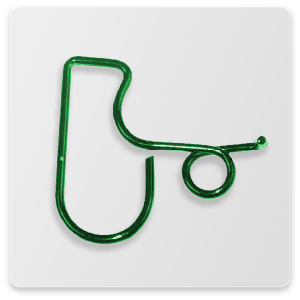
springs

Spring Rings

Close wound wire coils. Usually no more than 2 coils and primarily used as key rings. Wire sizes from 0.006 inches to 0.100 inch
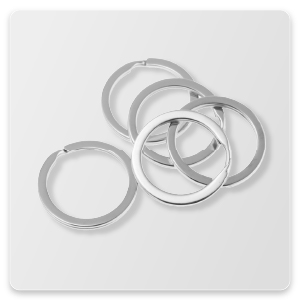
spring-rings


Magazine Springs

A variation between custom compression, extension, and torsion springs used to be installed into a firearm and perform several functions needed for the gun's performance. Wire sizes from 0.006 inches to 0.100 inch
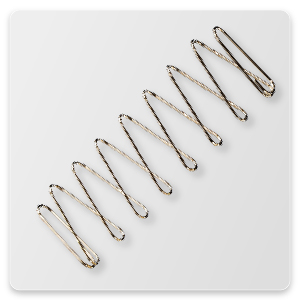
gun-spring

Medical Springs

Custom closed and open wound springs used specifically for medical devices. These springs are usually made from exotic material types. Wire sizes from 0.006 inches to 1.000 inch
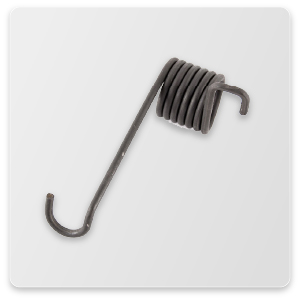
medical-spring

Wire Straight and Cut

Service of straightening coiled or bent wire as well as cutting it into a required length. Wire sizes from 0.006 inches to 0.100 inch
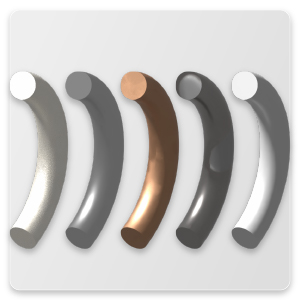
wire


What to Know Before You Buy:
  • 1. Type of Spring You Are Looking For
  • 2. How to Measure Springs
  • 3. Desired Lead Time
  • 4. Desired Working Load of the Spring
  • 5. Know your dimensions or have a print or image of your spring

Acxess Spring Specialties

Our main strengths here at Acxess Spring are:
  • 1. Fast Lead Times
  • 2. Quality Product
  • 3. On site engineering help
  • 4. Great Customer Service
  • 5. Great Pricing
  • 6. Specializes in a variety of spring types
  • 7. Put our customers first

Why is it Important to Understand the Different Types of Springs?

A spring is fundamentally a coil of wire that stores energy when you deform it (push, pull, or twist) and releases that energy once the load is removed. This function is essential to nearly every machine, from simple pens to complex surgical robots.

Choosing the right type of spring is not just about making a component fit; it’s about guaranteeing the reliability and performance of your final product. Get it wrong, and you risk failure, costly redesigns, and missed deadlines.

Here at Acxess Spring, we are a dedicated spring manufacturer with a singular focus: making sure you get the exact spring you need, right the first time. We simplify the complexities of industrial springs by offering on site engineering help, combining superior quality product with fast lead times. We specialize in a wide range of coil spring types, but we want to start you off with the fundamentals. Mastering these four main types will give you 90% of the knowledge you need to start your first project with confidence.

What are the Four Main Types of Springs, and How Do They Work?

Springs are primarily categorized by the type of force they resist: pushing, pulling, or twisting. Once you understand the direction of the force your application requires, selecting the right spring type becomes straightforward.

Closed and square end compression springClosed and square end compression spring

What are Compression Springs, and When Do I Need Them?

Compression springs are the most common type of spring you will encounter. They are designed to operate under a compressive load, meaning they resist a pushing force. Think of them as energy absorbers that always want to expand back to their original height.  

  • How They Work: When a force is applied, the open space (pitch) between the coils closes, storing mechanical energy. When the force is removed, the spring releases this energy, pushing outward.  

  • Where They Push: They are everywhere! You'll find them in car shock absorbers, retractable pens, electrical contacts, and almost every mechanism that needs two components pushed apart.  

  • Acxess Spring Capability: We manufacture high-precision compression springs with wire sizes ranging from 0.007 inches up to 1.250 inches.

Extension SpringExtension Spring

How Do Extension Springs Function?

Extension springs, also known as tension springs, perform the opposite task: they store energy when a pulling force is applied. Their purpose is to pull two components together.  

  • How They Work: The coils are usually wound tightly together, incorporating a small amount of "initial tension." This internal force ensures the spring resists being pulled apart immediately. To connect to objects, these springs require special end configurations, typically hooks or loops.  

  • Where They Pull: They are commonly used in devices like luggage scales, trampolines, and garage door mechanisms, anywhere a restorative pulling force is needed.  

  • Acxess Spring Capability: We produce custom extension springs, including specialized hooks and loops, using wire sizes from 0.007 inches to 1.250 inch.


Small Torsion SpringSmall Torsion Spring

When Should I Use Torsion Springs??

Torsion springs are distinct because they manage a rotational or twisting force, producing torque, rather than a straight pushing or pulling force.  

  • How They Work: Torsion springs feature straight ends, known as legs, which are anchored to components. When these legs are rotated (deflected), the spring stores energy by twisting around its central axis. When released, it delivers rotational force, like a powerful hinge.  

  • Where They Twist: They are the power source in objects that rotate or clamp, such as a simple clothespin, mousetraps, and car tailgates.  

  • Acxess Spring Capability: We manufacture precision torsion springs with wire sizes from 0.007 inches to 1.250 inch, specializing in crafting the custom leg shapes your application requires.

Conical SpringConical Spring

Why are Conical Springs Used in Tight Spaces?

Conical springs, sometimes called tapered springs, are specialized compression springs that solve two common engineering problems: space constraints and stability.

  • How They Work: Unlike standard cylindrical compression springs, conical springs have an outer diameter that progressively decreases from one end to the other, giving them a cone shape. This tapered shape is a huge advantage because it allows the coils to telescope or "nest" inside one another when the spring is fully compressed.  

  • Why They Are Better:

  1. Reduced Solid Height: The nesting feature means the compressed height can be dramatically reduced (down to nearly one wire diameter), allowing for maximum travel in limited space.  

  2. Increased Stability: Their shape makes them much more stable and less likely to buckle under heavy loads compared to standard straight springs.  

  • Where They Fit: Conical springs are ideal for push buttons, high-load mechanical systems, and are widely used as battery contacts to ensure consistent pressure.  

  • Acxess Spring Capability: We specialize in manufacturing these unique variable-rate springs with wire sizes from 0.007 inches to 1.250 inch.


  • Beyond the Standard Coil Spring Types

    While the four types above cover most basic needs, Acxess Spring is ready for your complex, high-performance, or miniaturized projects. Our extensive range of industrial springs and custom solutions ensures we have a perfect fit for every challenge.

    Double Torsion SpringDouble Torsion Spring

    What are Double Torsion Springs, and Why are They Used?

    A double torsion spring combines two torsion springs into one, connected by a bridge of wire. This parallel design offers two major benefits:  

    1. Double the Torque: The dual-coil configuration effectively doubles the torque output compared to a single spring of similar size.  

    2. Bidirectional Force: They can provide rotational force in both clockwise and counterclockwise directions, making them versatile for complex mechanisms.  

    • Wire Size Range: 0.006 inches to 0.100 inches.


    Garter SpringGarter Spring

    What are Garter Springs, and When are They Used for Sealing?

    Garter springs are extension or compression springs connected end-to-end to form a continuous circle, like a garter belt. Their key function is to exert a constant, uniform radial force. They are predominantly used as oil seals or shaft seals, where they maintain consistent pressure around a component to prevent leaks.  

    • Wire Size Range: 0.006 inches to 0.100 inches.


    Micro SpringsMicro Springs
    Medical SpringsMedical Springs

    What are Micro and Medical Springs?

    In modern miniaturized electronics and medical devices, size and reliability are everything.

    • Micro Springs: These are exceptionally small springs (compression, extension, or torsion) used when space is extremely limited. They require advanced engineering and precision tooling to prevent failure in tight-tolerance applications.  

      • Wire Size Range: 0.006 inches to 0.020 inch.

    • Medical Springs: These are custom springs designed specifically for high-stakes medical devices and implants. Due to stringent safety requirements, they often utilize exotic material types, which offer superior fatigue resistance and biocompatibility compared to standard stainless steel.  

      • Wire Size Range: 0.006 inches to 1.000 inches.


    Custom Wire SpringCustom Wire Spring
    Magazine SpringsMagazine Springs
    Spring RingsSpring Rings

    What Other Specialized Wire Products Does Acxess Spring Offer?

    We also transform wire into non-coiled, specialized shapes to meet unique structural and mechanical requirements:

    • Custom Wire Forms: Wire forms are precisely bent wires used as clips, hooks, pins, levers, or brackets that exert tension, support weight, or keep parts in a fixed position.  

      • Wire Size Range: 0.006 inches to 0.100 inches.

    • Magazine Springs: Highly specialized custom springs (a variation of compression, extension, or torsion) used in firearms to reliably push bullets into the chamber.  

      • Wire Size Range: 0.006 inches to 0.100 inches.

    • Spring Rings: Close wound coils (usually 2 or fewer) commonly used as key rings or jewelry clasps.  

      • Wire Size Range: 0.006 inches to 0.100 inches.


    What Should I Know Before I Buy?

    If you are ready to order your custom springs, having this information ready will drastically speed up your lead time and reduce costs, ensuring you benefit from great pricing and a quality product:

    1. Type of Spring: Know if you need a compression, extension, torsion, or specialized type.

    2. How to Measure Springs: Have your key dimensions ready: Wire Diameter, Outer Diameter, Free Length, and the total number of coils.

    3. Working Load: What load (force) does the spring need to provide, and how far will it travel (deflect) under that load?

    4. A Print or Image: If you have an existing sample, a drawing or a blueprint, share it! A visual reference is invaluable.

    If you are unsure about any of these steps, remember that our on site engineering help is available to guide you. Don't leave performance to chance. Contact our experts for any inquiry on custom springs today and let us simplify your manufacturing process.


    Ready to Start Your Spring Project?

    Selecting the right mechanical component should not be complicated. By understanding the core functions of the primary types of springs (Compression, Extension, Torsion, and Conical), you are now well-equipped to define your project requirements. As a leading spring manufacturer specializing in both standard and complex, high-tolerance designs, Acxess Spring is your reliable partner. We are committed to putting our customers first and delivering precision every time.

    5 Key Takeaways for Designing with Confidence:

    • Force Determines Type: Choose your spring based on the force it resists: pushing (Compression), pulling (Extension), or twisting (Torsion).  

    • Conical Springs Save Space: Conical springs solve tight-space problems by allowing coils to nest inside each other, maximizing travel while reducing the fully compressed height.  

    • Durability and Torque: For demanding rotational applications, Double Torsion springs provide enhanced durability and effectively double the torque of a single spring.  

    • Medical Springs Need Specialized Materials: Medical springs and micro springs often require exotic material types for high performance, fatigue endurance, and safety in critical devices.  

    Acxess Offers Expertise: Acxess Spring provides fast lead times, great customer service, and crucial on site engineering help to ensure your custom spring specifications are optimized for performance and cost.